
Is Therapy the Right Fit for My Child?
Every Child Faces Challenges. How Do You Know When It's Time for Extra Support?
Every child experiences worry, frustration, sadness, and big emotions as they grow.
There will be difficult days, challenging transitions, and moments when parenting feels especially hard.
So how do you know when what you're seeing is part of typical development—and when it may be time to seek professional support?
At The Center for Family Empowerment, we believe therapy isn't only for children in crisis. Therapy can help children develop healthy coping skills, strengthen relationships, and navigate life's challenges before concerns become more overwhelming.
If you're asking yourself whether therapy might help, you've already taken an important first step.
You Know Your Child Best
As a parent, you know when something feels different. Sometimes it's a dramatic change.
Other times, it's a gradual feeling that your child just doesn't seem like themselves anymore.
You might notice:
Your child worrying much more than usual • Frequent emotional outbursts that are becoming harder to manage • Withdrawal from friends, family, or activities they once enjoyed • Increasing conflict at home • Changes in sleep, appetite, or energy • Difficulty at school • Behaviors that don't seem to improve despite your best efforts
You don't need to wait until things become a crisis before asking for help.
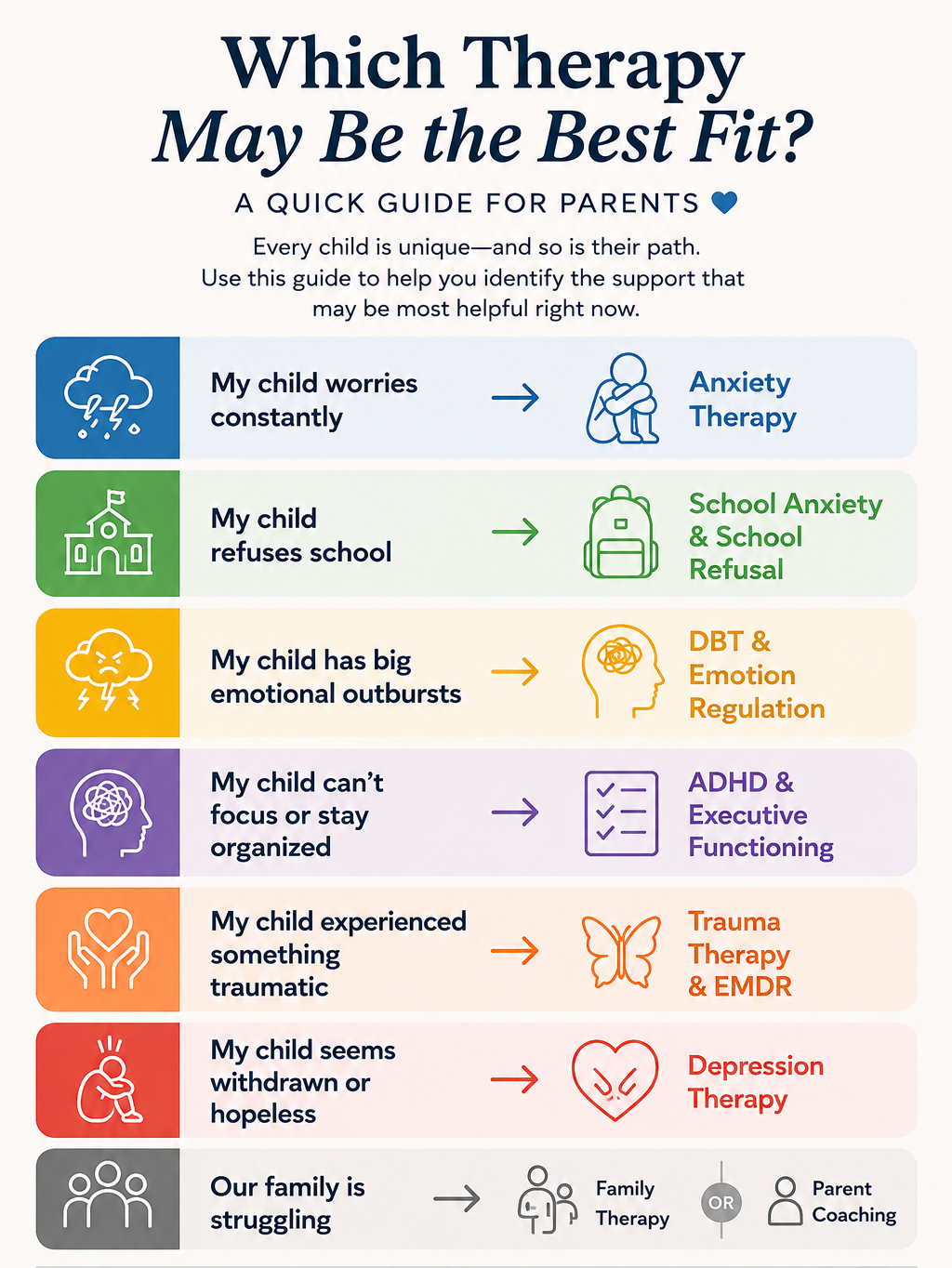
Signs Your Child May Benefit from Therapy
-
Anxiety That Interferes with Daily Life
If worry is preventing your child from enjoying school, friendships, sports, sleepovers, or everyday activities, therapy can help them develop healthier ways of coping.
-
School Refusal or School Anxiety
If getting your child to school has become a daily struggle—or anxiety, panic, bullying, or emotional distress are affecting attendance—specialized support can help.
-
Sadness, Withdrawal, or Loss of Interest
Children don't always express depression through tears.
Some become irritable, withdrawn, lose motivation, or stop enjoying activities they once loved.
-
Obsessive Thoughts or Compulsive Behaviors
Repeated reassurance seeking, rituals, intrusive thoughts, checking behaviors, or fears that seem difficult to control may be signs of OCD.
-
Difficulty Managing Big Emotions
Some children experience emotions very intensely.
Frequent meltdowns, impulsive behaviors, emotional outbursts, or difficulty calming down may benefit from specialized support.
-
Difficulty Focusing, Organizing, or Managing Responsibilities
If your child struggles with attention, executive functioning, organization, emotional regulation, or impulsivity, therapy can help build practical skills while supporting confidence.
-
Changes Following a Difficult Experience
Trauma doesn't always look the way people expect.
Children may become anxious, withdrawn, irritable, emotionally reactive, or experience changes after bullying, divorce, medical events, grief, accidents, or other overwhelming experiences.
-
Behavioral Changes in Young Children
Young children often communicate through behavior rather than words.
If you've noticed increased tantrums, aggression, fears, separation difficulties, or emotional changes, play therapy may help them express what they're experiencing.
Therapy Isn't About "Fixing" Children
One of the biggest misconceptions about therapy is that something has to be seriously wrong before a child can benefit. We see therapy differently. Therapy is an opportunity for children to:
• Better understand their emotions • Build healthy coping skills • Improve confidence • Strengthen relationships
• Learn problem-solving skills • Navigate life transitions • Develop resilience that lasts beyond childhood
Many families seek therapy not because they've failed, but because they want additional support. Seeking help is a sign of strength—not failure.
What If I'm Still Not Sure?
Many parents worry they'll overreact. Others worry they'll wait too long. If you're asking whether therapy might help, it's often worth having a conversation.
During an initial consultation, we'll learn more about your concerns, answer your questions, and help determine whether therapy—or another resource—is the best fit for your family. There is never pressure to begin treatment simply because you reached out. Our goal is to help families make informed decisions with confidence.
Why Families Choose The Center for Family Empowerment
Families choose The Center for Family Empowerment because we believe every child deserves individualized, evidence-based care—and every parent deserves support along the way. We don't believe in one-size-fits-all treatment.
We take time to understand your child's strengths, relationships, developmental stage, and unique experiences before developing a personalized treatment plan. Our clinicians specialize in working with children, teens, young adults, parents, and families, and we partner closely with caregivers throughout the therapeutic process whenever appropriate.
Whether your family is navigating anxiety, ADHD, OCD, trauma, depression, emotional regulation, or life transitions, we're here to help.
Frequently Asked Questions
Do I need to know exactly what's wrong before scheduling?
No. Many families aren't sure whether they're seeing anxiety, ADHD, a developmental phase, or something else entirely. That's okay. We'll help you better understand your concerns and determine the most appropriate next steps.
What if my child doesn't want to come to therapy?
It's common for children and teens to feel uncertain at first. Our clinicians work to build trust, meet children where they are developmentally, and create a space where they feel comfortable participating.
Can therapy help even if my child's challenges seem "mild"?
Yes. Therapy isn't only for crises. Early support often helps children develop coping skills before concerns become more disruptive.
Will I be involved in therapy?
Often, yes. Parents are an important part of the therapeutic process, and we'll discuss the level of involvement that's most appropriate for your child's age and treatment goals.
Ready to Learn More?
You don't have to wait until things become overwhelming to seek support.
Whether you're looking for answers, guidance, or a place to start, we're here to help.
Together, we'll determine the best path forward for your child—and for your family.